
Schertz Concrete Timing: Best Season to Pour in 2026
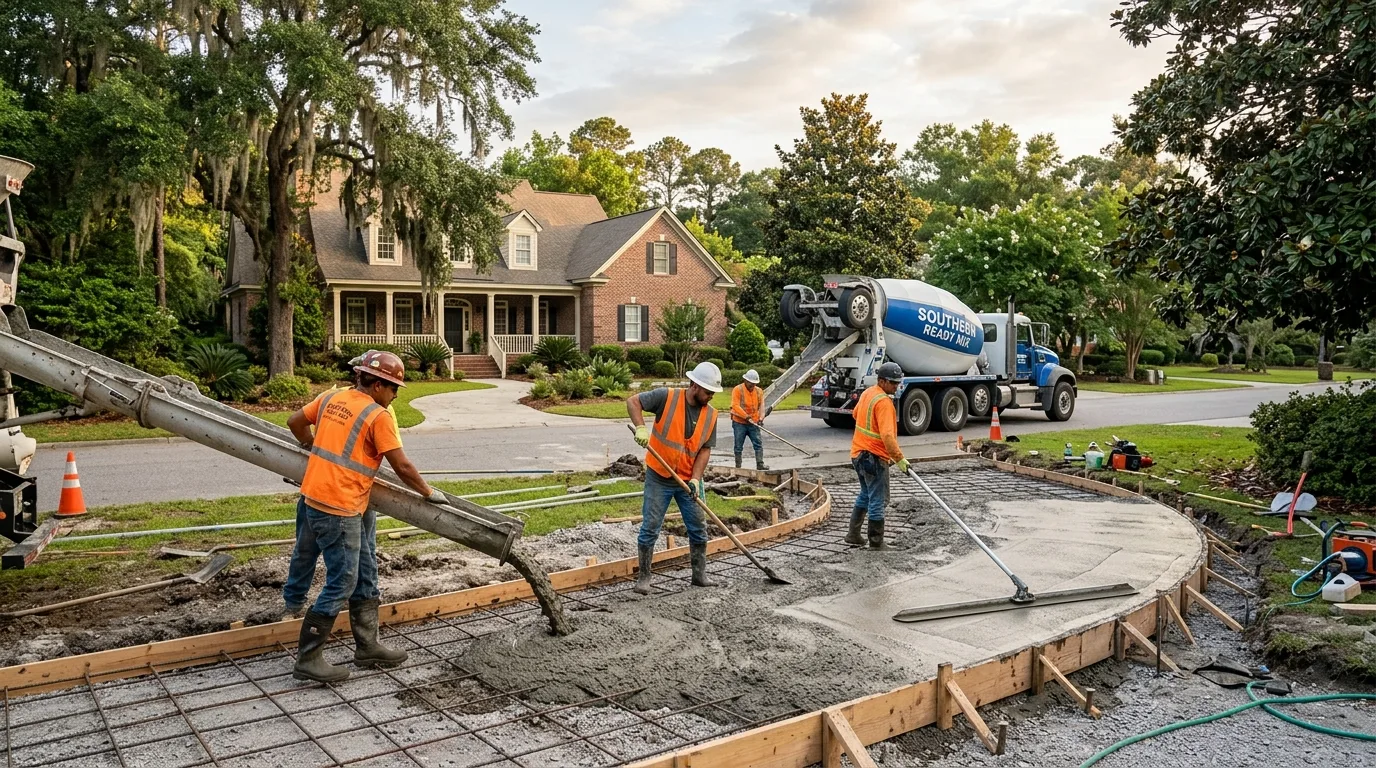
Concrete is a time-sensitive material, and in Schertz, the outdoor temperature at pour time matters more than in most markets. With summer highs averaging 97°F in August and occasional winter cold snaps dropping below 40°F, the difference between a well-timed Schertz concrete project and a poorly timed one shows up in the finished surface — in the form of shrinkage cracks, cold joints, and surface defects that could have been prevented with better scheduling.
In this post, we cover what each season means for concrete in Schertz, the specific local climate data that affects pour timing, which project types are most sensitive to timing, and how to plan your project around the Schertz weather calendar.
Time Your Schertz Concrete Project Right
We schedule pours around Schertz's weather calendar and use the right mix admixtures for each season — ask us how.
Why Timing Matters for Concrete in Schertz
Concrete curing is a chemical reaction between cement and water — and that reaction is highly temperature-sensitive. When concrete cures at the right temperature (50–80°F), it develops its full design strength over 28 days. When it cures too hot or too cold, the reaction is disrupted, producing concrete that may look complete but is structurally compromised.
In Schertz, with an annual mean temperature of 70°F but extremes that run from 41°F in January to 97°F in August, the “right” pour time is not year-round. Understanding the two ideal windows and how to manage pours outside them is the foundation of good concrete planning in Guadalupe County.
Spring: The Best Season for Schertz Concrete
Late April through early June is the optimal window for concrete work in Schertz. Temperatures in this period average in the mid-60s to mid-80s, giving concrete crews the full working window needed for quality finishing, decorative stamping, and control joint cutting. Curing progresses at a healthy pace — not too fast to cause surface cracking, not too slow to create winter damage risk.
May is Schertz’s wettest month at 4.46 inches of average precipitation, so spring projects need to account for potential weather delays. Schedule with a one-to-two day weather buffer built in. The week following a heavy May rain may also be problematic for clay soil conditions — saturated subgrade may need time to drain and firm up before a pour.
Spring is particularly well-suited for stamped concrete projects and other decorative work that requires the longest uninterrupted working window. The concrete surface stays workable for two to three hours in spring conditions, compared to 90 minutes or less in summer.
Summer: Manageable With the Right Approach
Summer Pour in Schertz? We Know How to Do It Right.
Dawn scheduling, retarder admixtures, and proper curing protocols — ask about our summer concrete process.
Schertz summers are intense. July and August average daily highs of 95–97°F with 64 percent average humidity. These conditions create a narrow working window for concrete — as little as 90 minutes from pour to the point where stamping and finishing becomes difficult or impossible without surface defects.
That doesn’t mean summer concrete work should be avoided entirely. It means it requires a different approach:
Dawn pour scheduling: Starting the pour at sunrise (around 6:00–6:30 a.m. in July) takes advantage of the coolest part of the day. Finishing and jointing are completed before midday heat kicks in.
Retarder admixtures: Chemical retarders are added to the concrete mix to slow the setting reaction, extending the workable window from 90 minutes to two hours or more. This is standard practice for professional contractors in Central Texas summer conditions.
Windbreaks and shading: Wind accelerates surface evaporation. Simple windbreaks on the pour area reduce moisture loss from the surface before finishing. Temporary shade structures help on very exposed sites.
Wet curing: Applying wet burlap or curing blankets immediately after finishing, or applying a curing compound to seal the surface, prevents the rapid moisture loss that causes plastic shrinkage cracking.
For plain broom-finish concrete, summer pours by experienced contractors produce excellent results. For complex stamped patterns with multiple color applications, fall or spring scheduling is strongly recommended — the compressed working window in summer makes multi-step decorative finishing significantly more difficult.
Fall: Close Second to Spring
September through November is Schertz’s second-best concrete window. Temperatures moderate to the 60–80°F range, the working window extends back to two to three hours, and the risk of summer heat-driven surface defects disappears. Fall is particularly ideal for stamped concrete projects because decorative finishing benefits from unhurried working time.
Rainfall decreases in fall compared to spring, making scheduling more predictable. The period of September through mid-October often produces the most consistent concrete-friendly conditions of the year in Schertz — warm enough that cold-weather precautions aren’t needed, cool enough that heat is not a factor.
Homeowners who want stamped concrete, exposed aggregate, or any complex decorative finish should schedule for fall if they have the flexibility. The quality difference between a fall stamped pour and a summer stamped pour is visible in the finished surface.
Winter: Proceed with Caution
Schertz winters are mild by most standards — average January low of 41°F, average January high of 63°F — but occasional cold snaps push temperatures below 40°F. Concrete poured when temperatures drop below 40°F undergoes a significantly slowed curing reaction; below freezing, free water in the concrete mix can freeze before the cement has hydrated, causing permanent internal damage.
Most standard winter days in Schertz are suitable for concrete work without special precautions. But during cold snaps — which can occur in December, January, or February — precautions are required:
- Heated water: Hot water can be added to the mix to raise the initial concrete temperature above 55°F at the point of pour.
- Insulating blankets: Freshly poured concrete can be covered with curing blankets to retain heat during the 24-hour period when it is most vulnerable to frost.
- Avoid evening pours before forecast cold snaps: If temperatures are forecast to drop to near or below freezing overnight, schedule the pour for mid-morning to allow the concrete to develop some early strength before the cold arrives.
For most Schertz winter days, no special precautions are needed. Monitor the week’s forecast and consult your contractor if temperatures below 40°F are in the three-day window around pour day.
Practical Uses for Timing Knowledge
Patios: Fall or spring. Patios are non-urgent — schedule for the best conditions.
Driveways: Any season with appropriate precautions. Spring and fall for best results; summer with dawn scheduling.
Stamped concrete: Fall strongly preferred. The extended working window in 65–80°F conditions is the difference between clean pattern definition and rushed, uneven stamping.
Foundation slabs: Must proceed on project timelines regardless of season. Contractors familiar with Schertz summer conditions will manage the pour appropriately.
Repair work: Year-round for isolated repairs, fall for large-area resurfacing.
Frequently Asked Questions
When should I schedule a concrete driveway in Schertz TX?
Late April through early June or September through November are the ideal windows. If your project needs to happen in summer, request early-morning scheduling and confirm your contractor uses retarder admixtures. Avoid scheduling major pours during cold snaps in January and February without confirming your contractor’s cold-weather process.
Does summer heat damage concrete in Schertz?
Improperly managed summer pours can produce surface defects — plastic shrinkage cracking, cold joints, and uneven texture on decorative finishes. Properly managed summer pours by experienced contractors — dawn scheduling, retarder admixtures, wet curing — produce concrete that meets full design strength. Heat is a manageable risk, not a prohibition. See our guide on concrete driveway costs in Schertz for how seasonal scheduling affects pricing.
Can concrete be poured in winter in Schertz?
Most Schertz winter days are suitable for concrete without special precautions. Monitor forecasts for cold snaps below 40°F. During those periods, heated mix water and insulating blankets are standard precautions. Full hard freeze events (below 28°F) should prompt rescheduling of any outdoor concrete pour.
Plan Your Schertz Concrete Project Around the Calendar
Call Schertz Concrete at (888) 376-0955 — we help you schedule for the best results and use the right mix design for each season.
Related: